

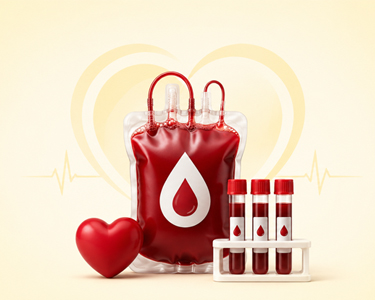
Overview
The Blood Bank Department at Lilavati Hospital, Gujarat, is a specialized unit that collects, tests, processes, stores, and distributes blood and its components. Some of these parts are red blood cells, platelets, plasma, and cryoprecipitate. Each one is used for a different medical purpose. Blood banks have strict safety rules to make sure that blood is compatible and that infections don't spread. Before being used, every donated unit is carefully screened, typed, and cross-matched. Patients don't often talk directly to a blood bank, but it is very important for both routine care and emergency medicine.
A blood bank doesn't treat diseases directly; instead, it supports treatment by providing doctors with the blood components they need. Red blood cells are used to treat anemia and blood loss, platelets help stop bleeding in people with low platelet counts, and plasma is used to treat clotting disorders. It also helps manage diseases such as thalassemia, hemophilia, and certain cancers, where blood support is critical. Blood banks also screen for infections and perform compatibility testing (cross-matching) to ensure transfusions are safe.
Blood banks are an important part of modern medicine because they ensure that safe, compatible blood is always available when needed. Improvements in screening, storage, and separating parts have made things safer and more efficient. Blood banks continue to support life-saving treatments and improve patients' lives across a wide range of medical conditions, as long as people donate blood regularly and the banks are well managed.