
Overview
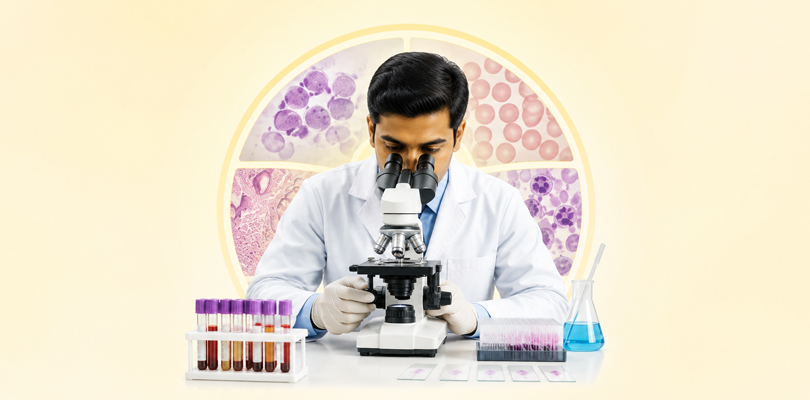
The department of Clinical Pathology at Lilavati Hospital, Gujarat, uses lab tests on blood, urine, and other body fluids to diagnose diseases. It quietly supports most of modern healthcare by giving doctors the information they need to make decisions. Biochemistry, microbiology, hematology, and immunology are all parts of this field. Our Clinical pathologists read test results, ensure that lab procedures are correct, and help doctors understand what the results mean for a patient's health. Patients might not talk to them directly, but their job is very important in ensuring the right diagnosis and treatment plan is made.
Clinical pathology does not treat conditions; however, it is essential for their identification and monitoring. It helps find infections (through cultures and microbiology tests), blood problems (through hematology), metabolic and organ-related problems (through biochemistry), and immune-related problems. It also helps with cancer diagnosis by using certain markers and lab results. It is also very important to monitor treatment, including ensuring medications are working, identifying side effects, and tracking disease progression.
As laboratory technology and automation improve, clinical pathology continues to evolve. Faster, more accurate testing has made it easier to find and treat diseases early. As medicine moves toward more personalized care, laboratory diagnostics are becoming increasingly important for tailoring treatment to individual patients. This field is an important part of modern healthcare.