
Overview
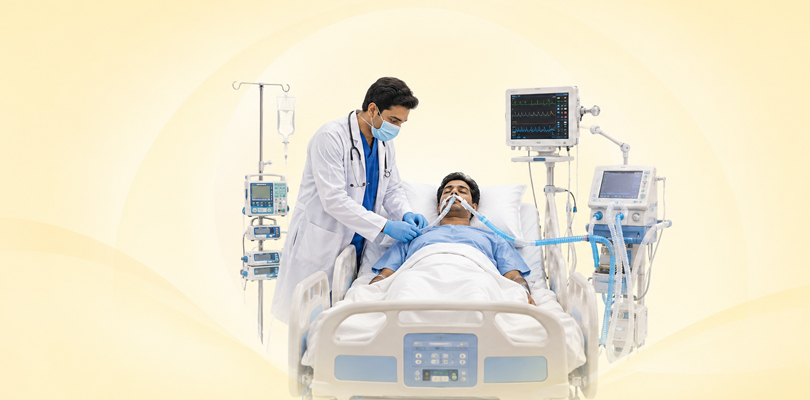
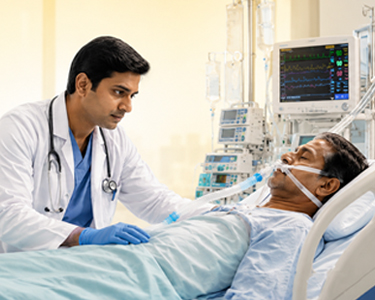
The department of Critical Care at Lilavati Hospital, Gujarat, assists patients who are very ill and require constant monitoring and advanced medical care. Most of the time, care is given in an Intensive Care Unit (ICU), which has specialized equipment and trained staff on duty 24 hours a day. When the body can't do these things on its own, these units help with breathing, circulation, and organ function. Ventilators, blood pressure medications, and continuous patient-monitoring systems are common parts of treatment. Critical care isn't just for one disease; it's for managing life-threatening conditions in many systems.
There are many serious conditions that fall under critical care. Some of these are respiratory failure that needs a ventilator, severe infections, organ failure (like kidney or liver failure), heart emergencies, and neurological emergencies. It also includes taking care of patients after high-risk surgeries and dealing with problems like shock or heavy bleeding. Advanced life support, dialysis, intravenous medications, and constant monitoring of vital signs are all possible treatments. Care is often multidisciplinary, meaning specialists from different fields work together.
The outcomes of critical care depend on the underlying condition and the speed of treatment initiation. Life-support systems, monitoring, and medical protocols have all significantly improved survival rates. Many patients can regain function and return to their normal lives with the right follow-up care, even though recovery may take time and require rehabilitation.