
Overview
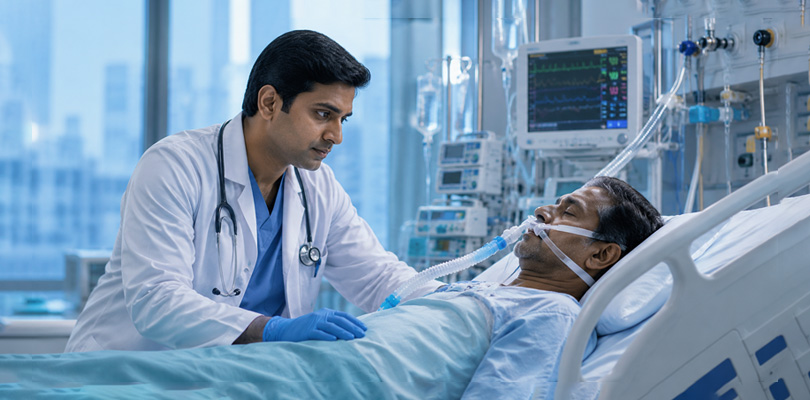
The department of Critical Care at Lilavati Hospital, Gujarat, focuses on patients with severe illnesses requiring constant observation. These patients' vital functions, such as breathing, heart function, or organ function, are either at risk or already failing. Most of the time, this care is provided in an Intensive Care Unit (ICU), a setting with advanced technology and the ability to respond quickly to changes in a patient's condition. Therefore, decisions in this field are often made quickly, and even small changes can have significant effects.
Our team, which works in critical care, is what makes it special. Doctors, nurses, respiratory therapists, and specialists work together, sometimes around the clock. Each member has a different area of expertise, such as managing ventilators, adjusting medications, or noticing subtle changes in a patient's condition. Communication is clear and constant. The ICU has a strong but coordinated rhythm, built on trust and experience.
Technology plays a pivotal role in contemporary critical care, though not in a detached or clinical manner. Ventilators assist with breathing, monitors track heart rhythms and oxygen saturation, and infusion pumps deliver precise medication dosages. These instruments don't replace human expertise; they augment it.
Critical care isn't just about keeping the body stable; it also includes emotional and mental support. Patients may be unconscious or unable to talk, but their families are involved. Doctors and nurses often spend time helping families make tough choices, explaining complex situations, and providing peace of mind. Critical care goes beyond medicine in many ways; it also involves empathy, communication, and trust.