
Overview
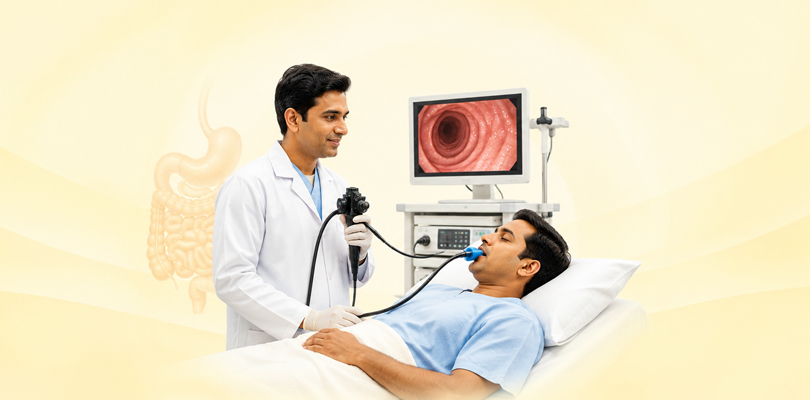
The department of Endoscopy at Lilavati Hospital, Gujarat, uses a thin, flexible tube with a camera and light at its end to look inside the digestive tract. An endoscope is a tube that is usually inserted through the mouth to examine the esophagus, stomach, and upper small intestine. It shows the inner lining directly and in real time, which makes it especially good at spotting small changes. Most of the time, this is performed as a day-care procedure, and the patient is usually lightly sedated to keep them comfortable. Endoscopy is not only a way to find out what's wrong; it can also be used to do small procedures at the same time.
Patients should undergo endoscopy if their digestive symptoms don't resolve or respond to basic treatment. Common reasons include ongoing acid reflux, upper abdominal pain, trouble swallowing, nausea, vomiting, or black stools, which are signs of bleeding. In some cases, it's used as part of routine screening for people with long-standing symptoms or certain risk factors.
Endoscopy can help detect a range of problems in the upper digestive tract. These include infections, gastritis, peptic ulcers, acid reflux (GERD), and early signs of tumors. Doctors can take biopsies during the procedure to look at them more closely. It can also be used to help with problems like stopping bleeding, removing small polyps, or widening narrow areas in the food pipe. This is a very useful tool for caring for the digestive system because it can both diagnose and treat.
Endoscopy is usually safe and well-tolerated, and recovery is typically quick. Most patients can go back to their normal activities the same day. It is very important for preventing complications and guiding timely treatment because it helps detect many conditions early, leading to better long-term results.