
Overview
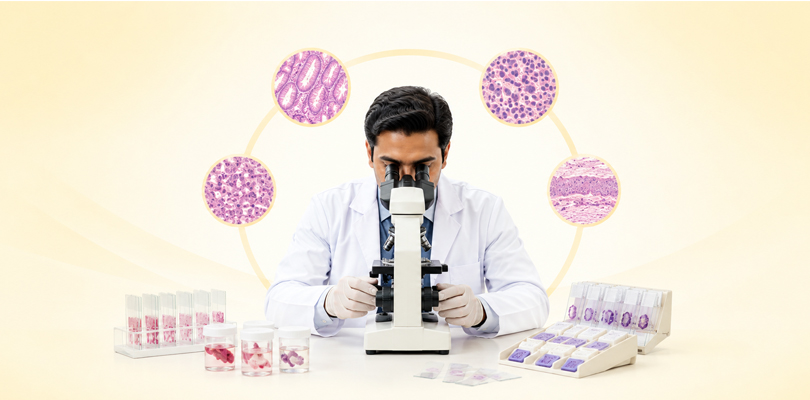
The department of Histopathology at Lilavati Hospital, Gujarat, examines tissues under a microscope to identify abnormalities. It studies small tissue samples, usually obtained through surgery or biopsy, to learn more about what's happening at the cellular level. Pathologists are experts who process, stain, and carefully look at these samples. Histopathology is very important for confirming diagnoses, especially in diseases such as cancer, infections, and inflammatory diseases. Patients may not see this process directly, but it is often the most important step in figuring out what kind of disease someone has.
Histopathology doesn't treat illnesses; instead, it provides vital diagnostic information. It's used to identify cancers such as breast, lung, colon, and skin cancers, as well as benign tumors. It helps detect infections, autoimmune diseases, and long-term inflammatory diseases that affect organs. It also plays a role in transplant medicine by detecting signs of organ rejection. Histopathology results help doctors decide which treatment will be best, such as surgery, chemotherapy, or other options.
Histopathology remains one of the best ways to ensure an accurate diagnosis. Advancements in staining techniques, digital pathology, and molecular analysis have collectively increased diagnostic precision and efficiency. Patients consistently benefit from superior care and improved outcomes when diagnoses are both early and accurate. This is attributable to the provision of more targeted and effective therapeutic interventions.