
Overview
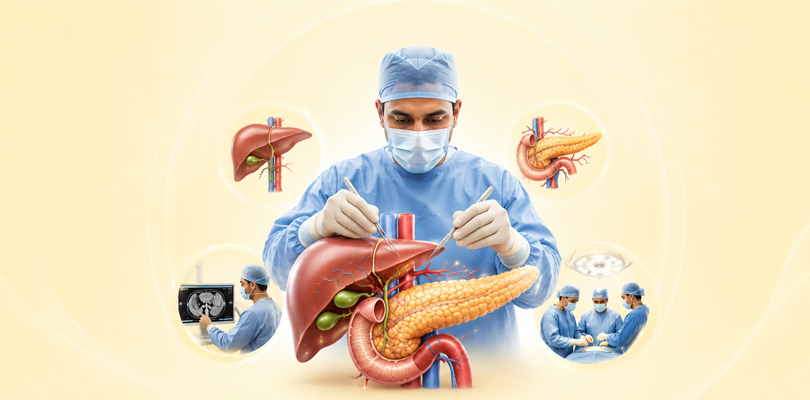
The department of Hepato-pancreato-biliary (HPB) surgery at Lilavati Hospital, Gujarat, focuses on a type of surgery that addresses problems of the liver, pancreas, and biliary system, including the gallbladder and bile ducts. The liver, pancreas, and biliary tree are crucial for digestion, metabolism, and detoxification; thus, dysfunction in these organs can significantly impact overall health. Hepatopancreatobiliary (HPB) surgeries are intricate procedures that often require careful preoperative planning due to complex anatomical relationships and proximity to vital blood vessels. The choice of surgical technique, open, laparoscopic, or robotic, depends on the individual clinical scenario. The primary objectives are to excise diseased tissue, restore proper bile or digestive enzyme flow, and preserve as much organ function as possible.
Referrals for HPB surgery typically arise from imaging studies or clinical presentations suggesting significant pathology in the liver, pancreas, or biliary system.
Some common reasons are stomach pain that won't go away, jaundice, unexplained weight loss, or liver function tests that aren't normal. If you have gallstones that are causing problems, tumors, cysts, or blockages in the bile ducts, you may need to see a surgeon. When an ultrasound, CT scan, or MRI shows a structural problem that can't be treated with medication alone, patients are often referred to a specialist.
HPB surgery is an effective treatment for many conditions. These include tumors in the liver, whether they are benign or cancerous, as well as pancreatic tumors, gallbladder disease, blockages in the bile duct, and complicated gallstones. It also involves taking care of problems that come up with pancreatitis, cysts, and jaundice, which make it hard to see. Common surgeries include removing the gallbladder, liver resection, pancreatic surgery, and rebuilding the bile duct. Minimally invasive methods are used when possible. However, some cases are more complicated and need more extensive surgery.
The outcome depends on the condition and its stage, but new surgical techniques and better care before and after surgery have made a big difference. It may take longer to recover from this type of surgery than from simpler ones, but with the right follow-up, nutrition management, and ongoing care, many patients do well in the long run.