
Overview
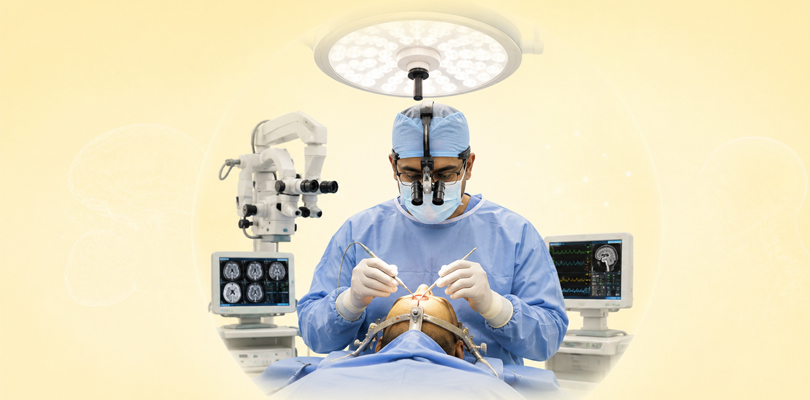
The department of Neurosurgery at Lilavati Hospital, Gujarat, treats conditions of the brain, spine, and nervous system through surgical intervention. It includes both emergency and planned procedures, from treating head injuries to managing complicated brain and spinal disorders. Our Neurosurgeons use advanced imaging techniques, such as MRI and CT scans, to help them make precise decisions. People often think of open surgery when they think of neurosurgical care, but not all neurosurgical care involves it. Some conditions can be treated with less invasive or image-guided methods. The goal is to fix the problem while keeping as much brain function as possible.
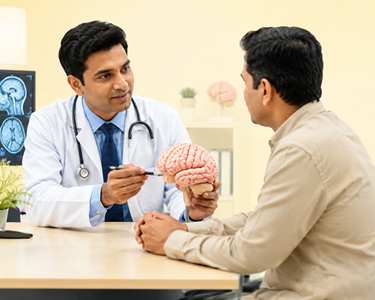
When a patient's brain or spine is affected by a condition requiring surgery, they are referred to neurosurgery. Some common reasons are severe or long-lasting headaches, seizures, weakness or numbness in the arms or legs, back or neck pain that involves nerves, or head and spine injuries. This specialty also takes care of people with tumors, bleeding in the brain, or spinal cord compression. When someone has a head injury or a stroke and is bleeding, getting neurosurgical care right away can be very important.
There are many different conditions that our neurosurgeons can help with. Some of these are brain tumors, spinal problems like slipped discs and spinal stenosis, head injuries, brain hemorrhages, and birth defects. It also involves treatment of nerve-related conditions such as trigeminal neuralgia and certain movement disorders. Some procedures are craniotomy, spinal surgery, tumor removal, and endoscopic or stereotactic procedures that are less invasive. Some treatments aim to relieve pressure on the brain or spinal cord, while others aim to fix or remove abnormal structures.
The results depend on the condition and how soon it is treated, but new surgical techniques and imaging have made the process much safer and more successful. After treatment, many patients feel better and can do things better. Rehabilitation and follow-up care are very important for recovery, especially for conditions that affect movement or brain function.
