
Overview
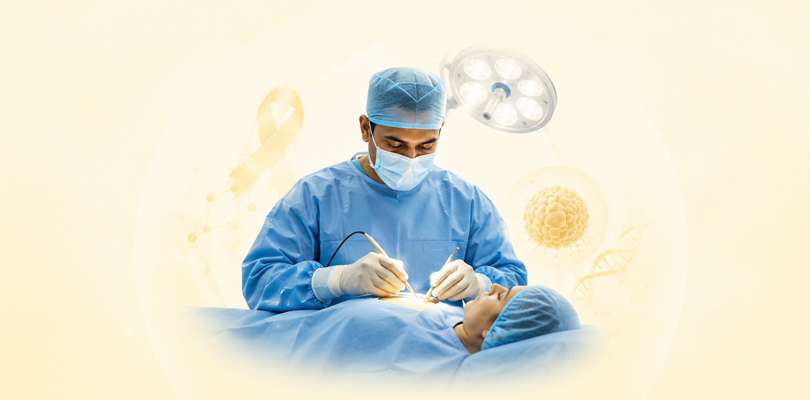
The Oncosurgery Department at Lilavati Hospital, Gujarat, treats cancer surgically. It means removing tumors and the surrounding tissues to achieve the best possible control of the disease. Surgery may be used alone or in combination with chemotherapy and radiation, depending on the type and stage of cancer. The treatment can be as simple as taking out small, localized tumors or as complicated as surgery on several organs. Our Surgeons often do reconstructive surgery after removing a tumor to help the patient look and feel better. Care is usually part of a plan involving many types of doctors, such as surgeons, oncologists, and others.
Oncosurgeons are called in when a person has cancer or when a suspicious growth needs to be looked at by a surgeon. Surgery may be suggested to excise a tumor, validate a diagnosis via biopsy, or diminish tumor size prior to alternative treatments. In some cases, it is done to ease symptoms such as pain, blockage, or bleeding caused by advanced disease. When cancer is still in its early stages, doctors often try to cure it. When it is more advanced, surgery may be one part of a larger treatment plan.
Oncosurgery is a kind of surgery that treats many kinds of cancer that affect different parts of the body. The types of cancer that affect the majority of people are Lung, skin, soft tissue, head and neck, digestive system, and breast cancers. Treatment involves removing the tumor, taking out nearby lymph nodes, removing part of an organ, and reconstructive surgery. In addition, our surgeons use tests like biopsies and staging surgeries to find out how far the cancer has spread.
Survival probabilities depend on the specific cancer type and its stage; however, early detection coupled with prompt surgical intervention significantly increases the chances of survival. Novel surgical techniques, including minimally invasive and organ-preserving strategies, have demonstrated efficacy in improving patient outcomes and shortening postoperative recovery time. Patients who benefit from integrated care and regular follow-up generally exhibit better long-term outcomes and a higher quality of life.
