Overview
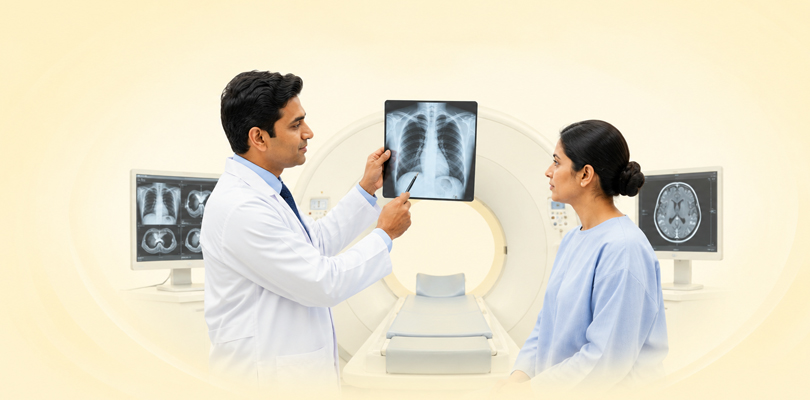
The department of Radiology at Lilavati Hospital, Gujarat, uses advanced imaging techniques to find and sometimes treat diseases. It includes X-rays, ultrasound, CT scans, and MRI, all of which allow doctors to see inside the body without cutting it open. Our Radiologists review these images and identify problems that might not be obvious just by looking at the person. Interventional radiology is another part of the field. It uses imaging to guide minimally invasive procedures. Radiology is very important in almost all medical fields. It often helps confirm diagnoses and guide treatment decisions.
Radiology doesn't treat most conditions, but it is very important for diagnosing them. It helps detect broken bones, tumors, infections, organ damage, and blood vessel problems. Imaging is used to detect problems in the brain, lungs, abdomen, bones, and soft tissues. In interventional radiology, on the other hand, some conditions are treated directly, such as placing stents, draining abscesses, or performing image-guided biopsies. These procedures are usually less invasive than traditional surgical procedures.
Radiology has come a long way in a short time, thanks to improvements in image quality and speed. Imaging has enabled early, accurate diagnoses, greatly improving treatment outcomes for many conditions. Radiology is becoming increasingly accurate as technology advances. It is an important part of modern, patient-centered healthcare.